




Terrain and Access Briefing for Distributors

Plan Power-Tiller Work for Hilly Small Fields

For power tiller work in hilly and small fields, the route to the plot, slope, surface, usable space, task, workload and local operating requirements all need review before comparing M80 and GN12 / GN15.

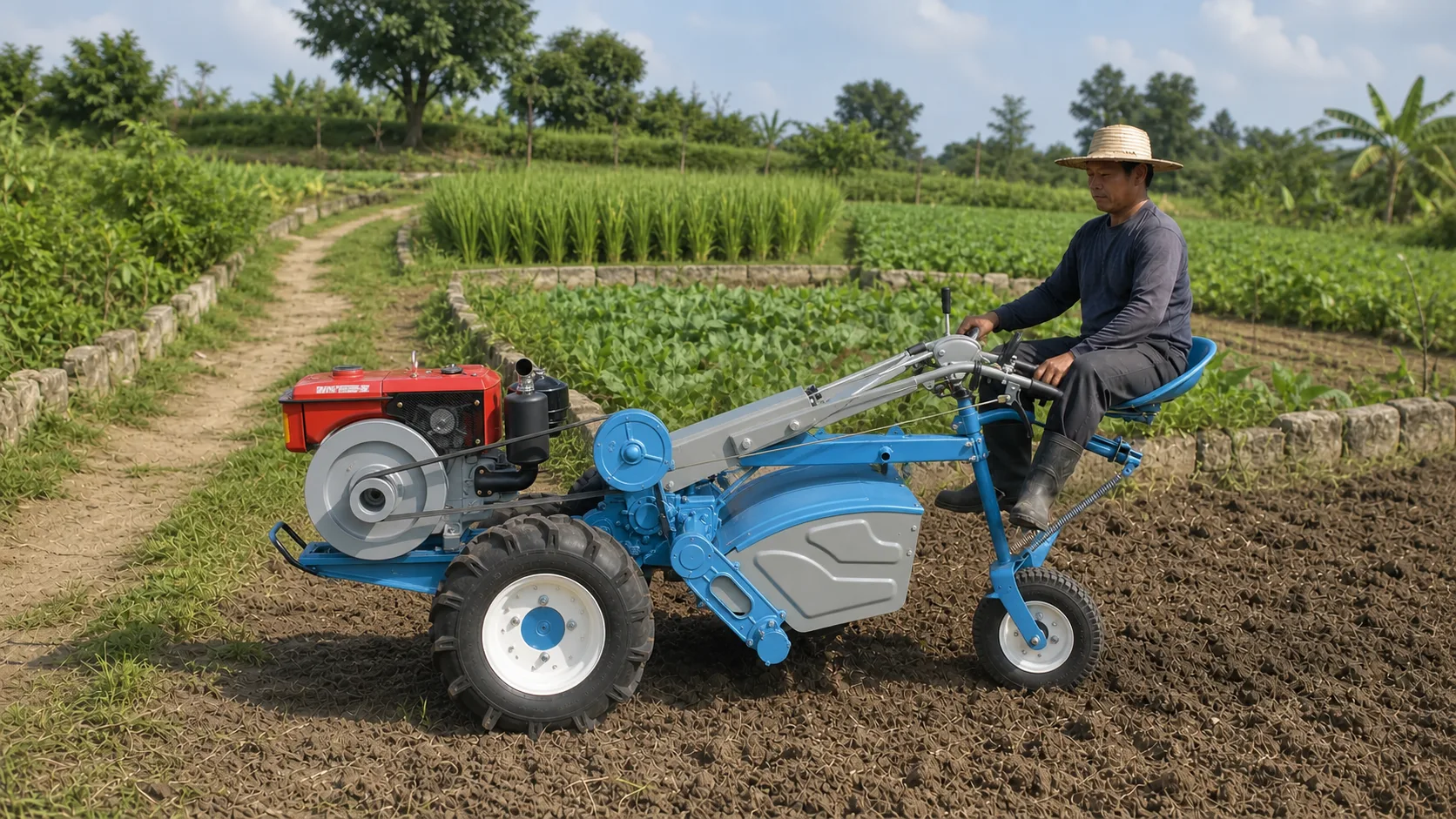
Operator seated on the red-engine blue-and-grey GN12 at a small cultivated plot with limited access
Illustrative GN12 field-operation scene — it does not establish a safe slope, operating method or final configuration

01 / Why Plot Size Is Not the Decision

A Small Plot Does Not Remove the Terrain Question.

Hilly and small-field requests combine two different questions: whether the machine can reach, turn and be controlled in the actual terrain, and whether it can complete the required workload. Establish the access route, incline and side-slope conditions, surface and hazards, usable working space, job and local operating requirements before comparing platforms.

02 / Terrain and Access Inputs

Map the Route, Surface and Space Before Reviewing a Platform.

  1. 01

    Route, slope and surface

    Describe the full route from unloading point to plot, the steepest incline and side-slope sections, surface when dry or wet, and loose stones, steps, terraces, edges or other hazards.

  2. 02

    Clearance and turning space

    Provide the narrowest gate, path and row widths, plot dimensions, headland or turning area and any point where the complete configured machine must be moved or turned.

  3. 03

    Job, workload and local operation

    State the required task and result, soil condition, frequency and daily workload, implement and wheel needs, operator requirements and any local rule that affects machine selection or use.

03 / M80 or GN12 / GN15?

Keep Access, Stability and Workload as Separate Questions.

When access, turning and lighter handling lead

MUBOTA M80

Review M80 when narrow routes, smaller plots, frequent turns or lighter handling are the leading constraints. Its documented basis includes a 179 kg chassis without engine, 390–780 mm wheel tread and 480 / 600 mm rotary-width choices; the complete configuration still requires terrain, stability, clearance and local safety review.

See M80 access considerations

When workload and traction lead—after terrain review

GN12 / GN15

Review the GN12 / GN15 platform family when sustained workload, traction or a heavier structural base matters more than compact handling. Its documented GN12 basis includes a 470 kg structure without engine, iron gearbox and a 600 mm rotary configuration; greater weight does not by itself make a machine safer or more suitable on a slope.

See GN12 / GN15 terrain considerations

This page is a procurement selection guide, not an operating instruction, slope-limit specification or safety approval. Do not infer safe operation from platform weight, product dimensions or the illustrative image. The buyer must confirm the actual route and terrain, complete configuration, stability and control requirements, operator capability, local rules and manufacturer guidance before purchase or use.

Ready to Map the Real Operating Route?

Send the Route, Terrain and Workload.

Share the destination country and customer type, unloading point and route to the plot, steepest incline and side-slope conditions, surface and hazards, narrowest access and turning space, plot and row dimensions, soil, required job and daily workload, preferred engine, starting method, wheel setup, working width and implement, quantity and packing requirements.

Send a Terrain and Access Brief