



Platform basis
An aluminium-alloy gearbox and documented 179 kg chassis weight without engine form the M80's compact structural basis. Belt, gear and chain stages connect the selected engine to travel and rotary work.
SUNTEC product catalogue
SUNTEC's published power tiller range centers on two documented agricultural machinery platforms. Understand the working basis of each machine, then open its product dossier for complete specifications, equipment references and configuration discussion points.
Before opening a model dossier, note the field conditions, required work, engine and starting preference, and implements. These inputs make it easier to open the relevant product dossier and prepare a useful quotation brief.
Build a Field BriefDescribe soil, water, slope, access width, row spacing and turning room.
List cultivation, traction or short-distance transport tasks and the expected workload.
State the preferred power basis, cooling context and hand- or electric-start requirement.
Identify the rotary, wheel, plough, seat, trailer or service items that must be quoted.
M80 power tiller
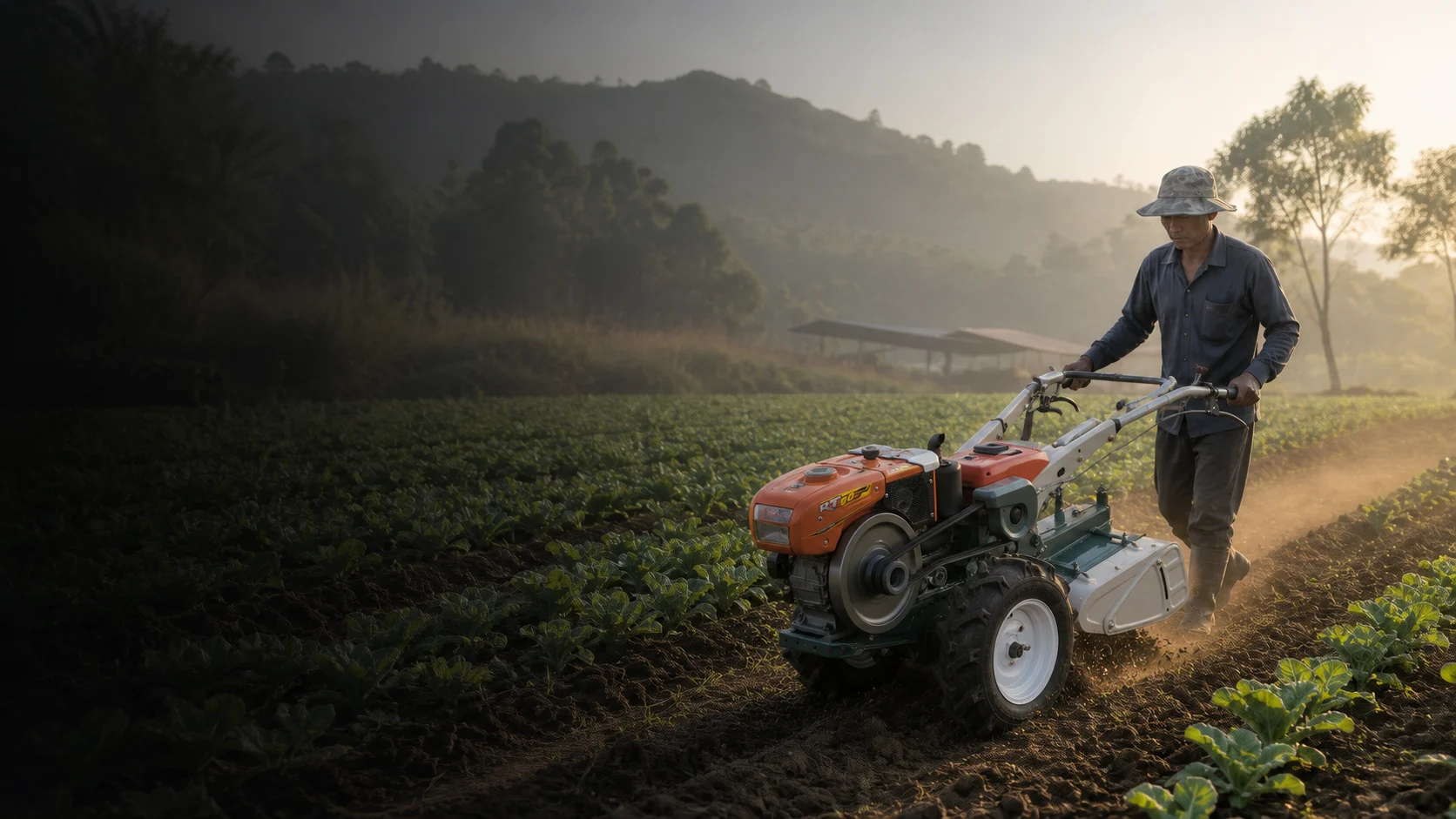
For small plots, field access and repeated turns
The M80 is a compact power tiller platform for access, handling and repeated work in smaller plots. Its 7–10 hp engine range, 6 forward and 2 reverse travel positions, and 480 or 600 mm rotary basis provide practical variables for local field requirements.
An aluminium-alloy gearbox and documented 179 kg chassis weight without engine form the M80's compact structural basis. Belt, gear and chain stages connect the selected engine to travel and rotary work.
Confirm the engine and starting method, 480 or 600 mm working width, wheel spacing, rotary arrangement and required implements. The dossier also shows mechanical areas used for parts identification.
GN series
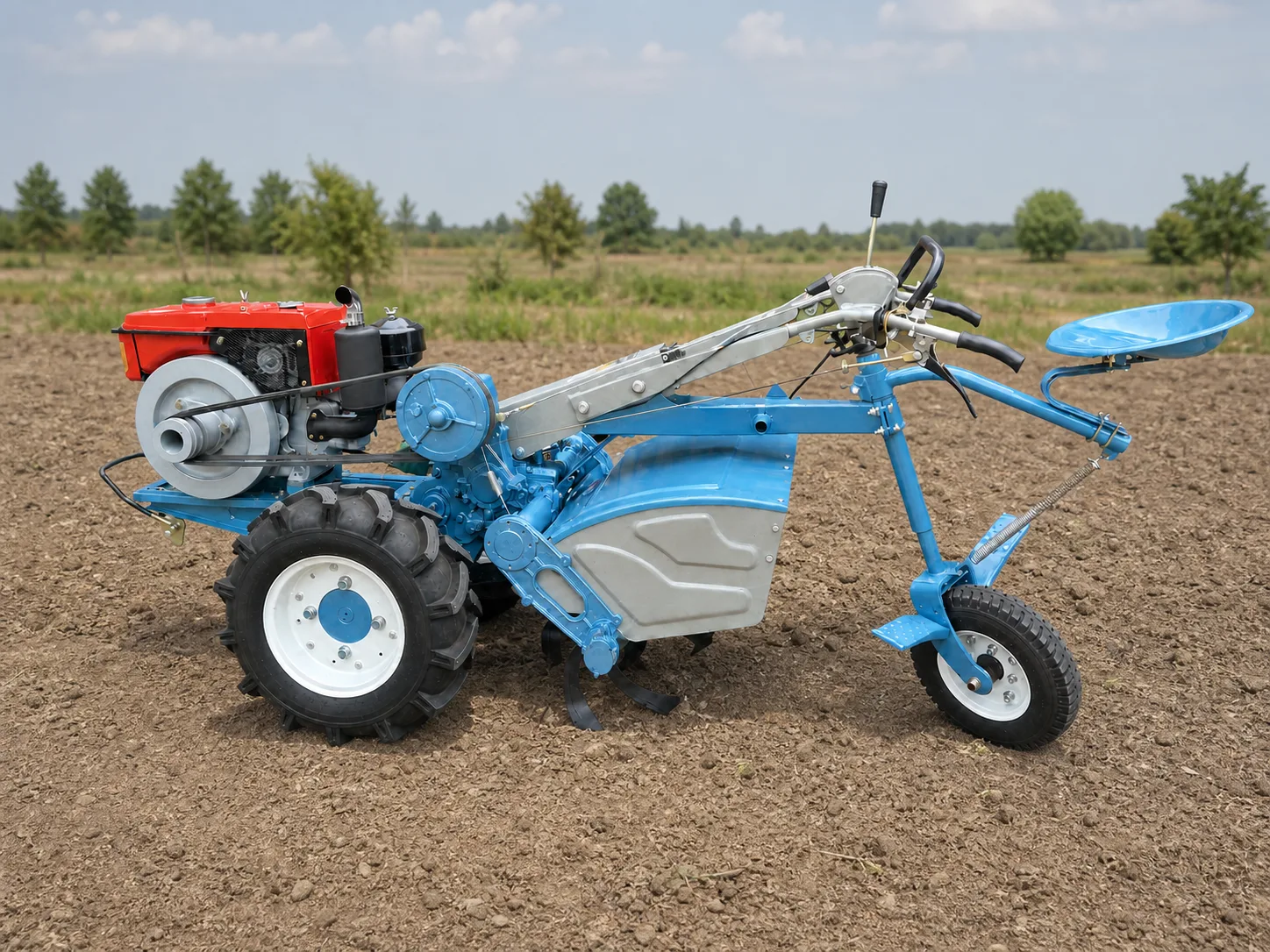
For sustained field work, traction and defined short-distance transport
The GN Series is a walking tractor platform for sustained cultivation, traction work and defined short-distance transport. The documented GN12 reference uses an RT125DI basis, 6 forward and 2 reverse travel positions, an iron gearbox and a 600 mm rotary configuration.
The GN12 structure weighs 470 kg without engine and uses an iron gearbox. RT125DI records 12.5 hp maximum and 11 hp continuous output at 2400 rpm; other engine references are not automatically standard supply.
Confirm the engine and starting method, wheel-tread setting, traction setup, rotary equipment, hitch arrangement and any seat, plough or trailer requirement. Inclusion and compatibility remain quotation-confirmed.
After reviewing the two platforms, use the field guides to document the conditions that affect configuration. These routes explain what to inspect; they do not assign one machine to every field of the same type.
Review water depth, soil bearing condition, access, traction equipment, working width and the intended cultivation stage before discussing a wet-field package.
Review paddy-field conditionsDescribe soil resistance, target result, row or plot dimensions, daily workload and required implements before defining the working setup.
Review dry-land conditionsCheck the full access route, slope direction, surface risks, narrow points, turning space and operating requirements before discussing machine configuration.
Review access and terrainThese names overlap across countries and dealer catalogues. Power tiller may emphasize a self-propelled machine centered on rotary soil work; walking tractor, hand tractor and two-wheel tractor often describe single-axle platforms that pull or power different equipment. The regional label alone is not enough. Confirm field access, power transmission, workload and the selected rotary, ploughing, traction or transport equipment.
The answers below define the published range and show where a distributor should look next for confirmed model information.
The terms overlap by market. Power tiller often emphasizes rotary cultivation; walking tractor often describes a self-propelled single-axle platform for different equipment. The model dossier defines the actual transmission, working assembly and configuration scope.
No. Buyers may use hand tractor and two-wheel tractor for machines also called walking tractors, so SUNTEC treats them as one terminology cluster. The published range remains M80 and the GN Series.
Review plot and row dimensions, entrance width, turning space, soil condition and blade arrangement together. M80 documents 480 and 600 mm arrangements; GN12 documents a 600 mm rotary configuration. Final inclusion must match the quotation.
The dossiers show engine references and starting-system examples, not a promise that every version is supplied in every market. State the power basis, service context and starting preference so the final engine can be quotation-confirmed.
Do not assume every pictured item is standard. List the required traction setup, rotary assembly, hitch hardware, plough, seat or transport connection in the enquiry and confirm the model-specific supply scope.
Not yet. Materials mention GN15 / Super 15, but its independent specification and current supply status remain unconfirmed. SUNTEC keeps GN15 outside the published range until that evidence is available.