





Paddy-Field Briefing for Distributors

Plan Power-Tiller Work for Paddy Fields

For power tiller work in paddy fields, soil and water condition, bund access, turning room, traction, workload and working width set the starting point for comparing M80 and GN12 / GN15.

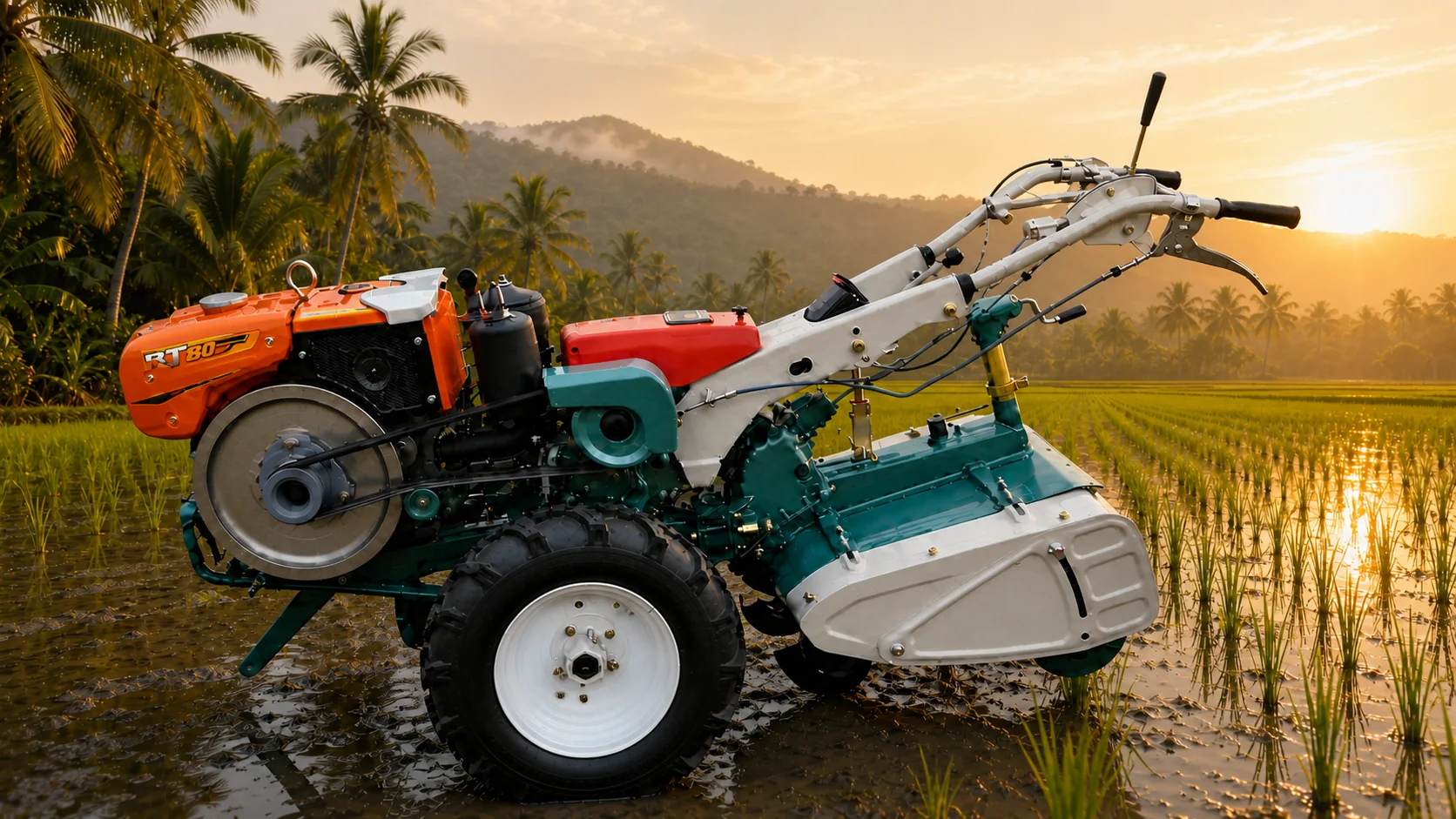
MUBOTA M80 power tiller shown complete in a paddy field
Illustrative M80 paddy-field scene — it does not verify suitability for a specific field or configuration

01 / Why Paddy Conditions Change the Order

Paddy Is a Starting Point, Not a Complete Operating Description.

Two paddy fields can require different machines and equipment. Before recommending a platform, establish the soil firmness and water condition during operation, the narrowest entrance or bund, available turning area, required cultivation result, expected daily workload and whether a special wheel or rotary setup must be considered.

02 / Paddy-Field Selection Inputs

Capture What Changes Movement, Traction and Width.

  1. 01

    Soil, water and traction

    Describe the soil firmness, moisture or standing-water condition when work begins, how the current wheel setup behaves and whether a different traction arrangement is being considered.

  2. 02

    Entrance, bunds and turning

    Provide the narrowest access width, bund width and condition, headland or turning area, plot dimensions and any obstacle that constrains machine movement.

  3. 03

    Workload, width and implement

    State the cultivation task and required result, expected daily workload, preferred working width, rotary or other implement requirement and any wheel setup that must enter the quote.

03 / M80 or GN12 / GN15?

Let the Leading Paddy Constraint Set the Platform Discussion.

When access and maneuverability lead

MUBOTA M80

M80 is the first platform to review for smaller or fragmented plots, narrower routes and frequent turns. Its documented basis includes a 179 kg chassis without engine, 390–780 mm wheel tread and 480 / 600 mm rotary-width choices; engine, wheels and implements still require configuration confirmation.

See M80 paddy considerations

When workload and traction lead

GN12 / GN15

The GN12 / GN15 platform family is relevant when sustained cultivation, traction needs or a heavier structural base lead the decision. Its documented GN12 basis includes a 470 kg structure without engine, iron gearbox and 600 mm rotary configuration; this alone does not establish fit for a specific wet field.

See GN12 / GN15 paddy considerations

This page is a procurement selection guide, not an operating instruction or a universal suitability or safety guarantee. Confirm the actual field, soil and water condition, access, local operating practice, wheel and implement compatibility, operator requirements and final configuration before purchase or use.

Ready to Turn Conditions into a Work Brief?

Send the Actual Paddy-Field Conditions.

Share the destination country, customer type, paddy size, soil and water condition, narrowest entrance and bund width, turning area, required work and daily workload, preferred wheel and implement setup, working width, quantity and packing requirements.

Send a Paddy-Field Brief