
Why the order of these questions matters more than the answers
A power tiller buying checklist works only if you run it in order: the work first, then the machine, then the configuration, then everything about keeping it alive in the field. Distributors who start at the middle — with the price list or the horsepower table — end up comparing two machines that were never going to do the same job, and the comparison decides nothing.
A power tiller for distributors is rarely bought on its own merits; it is bought against a market's soil, plot sizes, access roads and the customer's ability to keep it running. Each of those constrains the next. Skip the order and you get a machine that looks right on the specification sheet and sits in your warehouse after the second season.
For anyone working through a power tiller buying guide for distributors, the seven questions below are the ones that carry consequences. Each comes with what to ask for, and with what it means when the answer is vague.
The ordering rule: the field decides the platform, the platform decides the configuration, the configuration decides what has to be serviced — and the service answer decides whether the machine belongs in your range at all.Run the seven questions in that order. Run them out of order and every answer still sounds plausible, and none of them hold.What you are collecting is not a specification sheet; it is a written record of what the supplier committed to.
1. What work will this machine do in your market — and for whom?
Before the machine, describe the work. Paddy preparation, dry-land cultivation, hilly and narrow plots and mixed work with transport all push toward different machines, and the differences show up in traction, weight, turning space and the tools you will have to stock alongside.
Write it down in the terms your customers use:
- Field type and soil: flooded paddy, dry or stony soil, terraced or sloped ground, orchard rows.
- Plot size and access: how wide the entrance is, how much turning space exists at the headland, whether the machine has to travel between plots.
- The work beyond tillage: spraying, ridging, transport, pumping — a package planned for one job is usually a package that disappoints.
- Who operates it: a household, a hire-service operator, or a contractor who will work it hard every day.
The reason this comes first: it decides which questions below are even relevant. A market that is mostly terraced and small is one where a lighter machine earns its keep; larger, wetter plots push the discussion toward weight and traction. The evaluation logic follows the same field-first approach used in power tiller selection by field conditions, because terrain is the input everybody else treats as an afterthought.
What to ask for: a written description of the intended work — not a brochure of what the machine can theoretically do.
If the answer is vague: the supplier is describing a catalogue, not your market. That is a warning about how the rest of the order will go.
2. Which platform class fits that work — and what does it weigh?
Two-wheel tractor ranges are usually split by working weight and power, and the split is more useful than any single specification number. Both platforms here are single-cylinder diesel machines, so the engine reference sets the power band while the chassis sets the weight and the working width. A compact platform in the 7–10 hp class suits repeated work in smaller plots, tight access and mixed jobs. A heavier platform in the 12.5 hp class suits sustained cultivation, traction work and short-distance transport.
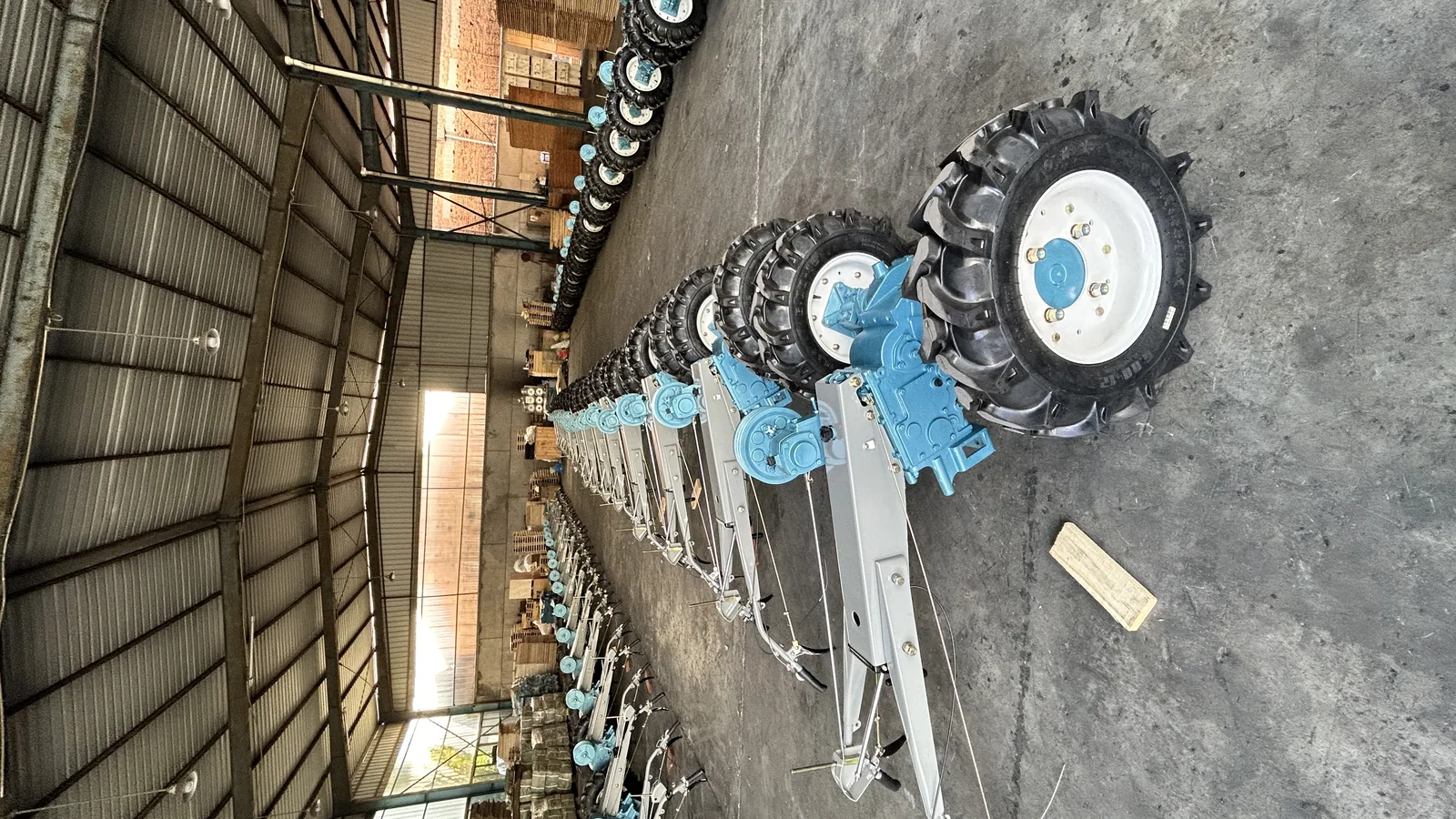
Weight is the number most buyers under-read: it drives how the machine handles, how it is loaded, and what the customer needs to move it. The M80 platform documents 179 kg of chassis weight without engine, while the heavier 12.5 hp-class GN12 walks in at 470 kg without engine — a difference that changes handling, transport and the trailer a dealer may have to sell alongside it. The working width follows the same logic: the compact platform documents a 480 mm standard and 600 mm maximum rotary arrangement, and the GN12's publicly confirmed range is 480 or 600 mm, its specification sheet recording the 600 mm configuration, so a plan that assumes one width will be corrected at quotation stage.
Tilling depth, blade count and travel speeds belong here too. Both platforms document 6 forward and 2 reverse travel positions, which matters as soon as the machine has to be walked between plots.

What to ask for: the structural facts of each candidate platform — weight without engine, working width options, blade arrangements, travel speeds — with the document they come from.
If the answer is vague: "depends on the configuration" is acceptable only when it is followed by the configuration options. If it is not, you are being asked to sign off on a machine nobody has described.
3. Which configuration will actually leave the factory for your order?
A reference specification is not a supply commitment, and this is where most first orders go wrong. Engine pairing, starting method, rotary arrangement, wheel spacing and implements are chosen one by one, and each choice has to be confirmed against what the supplier will actually build for your quantity — not against what the catalogue shows.
Read the specification sheet the way you would read a parts list: it tells you what is possible, while the order tells you what is real. Two habits close the gap:
- Ask for the exact configuration in writing, item by item, including the engine reference and its starting method, the rotary arrangement with its blade count, and the wheel or track spacing.
- Ask which of those items are standing supply and which have to be built or sourced: an engine reference carried in a table is not automatically the engine that ships.
The discipline pays off twice: a document to quote, and grounds for a conversation if the container arrives different from the paper. SUNTEC's power tiller specifications explained walks through the fields worth reading and the ones that mislead.

What to ask for: a configuration list with make-or-break items separated from options, and the basis of each engine reference.
If the answer is vague: expect the variance to appear after the deposit, in the middle of your season.
4. Who repairs it in the field, and how do parts get there?
This is the question the market will ask you, and the one most buying guides skip entirely. The machine is only half of what you are selling: the other half is the ability to keep it working in a place where nobody has seen this model before.
Ask about three things, in this order:
- What wears first, and what does a replacement set contain? Blades and tines, seals, belts and chains are the parts that decide whether a machine gets pulled out of the shed next season. Ask for the wear list with part identification, not just a parts catalogue.
- How does a part get from the supplier to a field mechanic? Consumable wear parts travel differently from one-off components, and your own answer to customers depends on which is which.
- Who is trained to do the work? A machine sold to a market with no service habit needs the supplier to help build one — through documentation, assembly drawings, and a reachable contact.
The industry logic is unglamorous and older than anyone's catalogue: a machine is worth what the parts and service around it are worth. Buyers who ignore that end up with a fleet of machines in the second season and a warehouse of paperwork in the third.
Service is where a supplier's ambition becomes visible. The service model for overseas distributors is worth reading first, because your questions should map onto whatever process the supplier already runs — or expose that there is none.
What to ask for: the wear-parts list with identification, a parts-ordering path with response expectations, and the training or documentation offered to your mechanics.
If the answer is vague: you are being sold a machine, not a supply relationship. Price that risk into whatever you order.
5. What does the packing plan say — and what does one container hold?
Packing is a purchase decision disguised as logistics. The same machine can arrive as a partially assembled unit or as a knocked-down set with wheels, handlebars and implements packed separately, and the difference lands on your floor as assembly labour, missing fixings and a customer who expected to drive it away.
Four points are worth settling before you order:
- The packing form: assembled, semi-knocked-down, or crated in components, and what the crates contain.
- What is included in the unit: tools, spare wear parts, documentation and the wheel set actually specified.
- How many units fit one container for your configuration, since wheel sets, implements and packing form all change the count.
- Who owns what in transit: the term of sale decides where your cost and risk begin, which is exactly what the ICC's Incoterms 2020 rules define; agreeing a term you have not read is agreeing to an argument later.

The receiving end matters as much: sketch out where the container is opened, who unpacks it, and where the units are stored before sale.
What to ask for: a packing specification per unit, an expected count per container for the configuration you chose, and the proposed term of sale in writing.
If the answer is vague: ask again in writing. Vague packing is usually the first sign that the configuration itself has not been frozen.
6. What does the price cover, and what documents come with it?
Price is a structure, not a number, and you cannot compare two suppliers until you know what each quote includes. Ask for the breakdown rather than the total: machine, engine option, implements, wheel set, packing, inland movement to port, and the trade term the price is quoted under. A quotation that gives one figure will grow.
Then ask about documents, in two groups:
- Documents that travel with the goods — packing list, invoice, and whatever your own customs and market require for import clearance.
- Documents that explain the product — the specification sheet, the wear-parts list, an operator manual in a language your customers read, and the assembly documentation your mechanics will actually use.
Note what this question does not ask for: a promise. It asks who produces each document and when, because the answer is checkable. If a document is described as forthcoming, treat it as absent until it arrives, and put the same request through the power tiller procurement guide checklist before the order is placed.
What to ask for: a line-item quotation under a named trade term, plus a document list with owners and timing.
If the answer is vague: you have found the boundary of the relationship. Everything past that boundary is your risk.
7. What happens when the first container is not what was promised?
Assume one problem, because it is the honest way to plan. A wrong wheel set, a blade count that does not match the sheet, a unit that will not start after a week on a humid dock. What matters is not whether the supplier promises it will not happen — every supplier does — but what the two of you have agreed to do when it does.
Set the process up before the order:
- Photo and number everything on arrival: unit, engine reference, blade arrangement, wheel set, and the packing list line it should have matched.
- Separate the causes: damage in transit, a configuration error at the factory, and normal wear are three different conversations, and mixing them wastes the season.
- Agree the escalation path in writing: who is contacted, what evidence is needed, and how a replacement part reaches your market.
The common problems reported with power tillers cluster in identifiable areas — the tilling assembly, the drive path from engine to rotor, and the starting system. Each of those is traceable to a replaceable item, which is why the wear-parts list from question 4 is also a troubleshooting document. That is also why machinery evaluation is documented as a field-testing exercise rather than a failure catalogue — see FAO's Selection, testing and evaluation of agricultural machinery and equipment. When the failure is not traceable to a replaceable item, the discussion is no longer about parts: it is about the machine class itself, which is the same distinction that separates a power tiller from a rear-tine tiller in the first place.
What to ask for: a short written problem procedure — evidence, contacts, and the parts route — agreed before the first order ships.
If the answer is vague: the relationship has no failure mode, which means the failure mode will be invented at the worst moment.
The power tiller buying checklist you can score in one call
Run the seven questions in order and score each one on whether you got a document, a verbal assurance, or nothing. Take the table below into the call:
# | Question | What you should get | What a vague answer means |
|---|---|---|---|
1 | What work will it do, for whom? | Written description of fields, access, workload | The supplier is describing a catalogue |
2 | Which platform class fits? | Structural facts with their source document | "Depends on configuration" with no options |
3 | Which configuration will ship? | Item-by-item list; standing supply vs option | Variance will surface after the deposit |
4 | Who repairs it in the field? | Wear list, parts route, training or documentation | You are being sold a machine, not a supply |
5 | What does packing and a container hold? | Packing spec, units per container, trade term | Configuration is not yet frozen |
6 | What does the price cover, what documents come with it? | Line-item quote under a named term; document owners | You have reached the boundary of the relationship |
7 | What happens if the first container is wrong? | Agreed evidence, contacts and parts route | Failure mode will be invented later |
Keep the answers in one file per supplier, dated, because a configuration answer from March is not an answer in September. And ask the same seven questions of every candidate — including the one you already like — so that the comparison is between suppliers rather than between brochures.
If you want the structural facts for both platforms side by side before the calls, SUNTEC's product range sets out both, and you can send your market, workload and intended configuration to have the seven answers put in writing.