
"Water cooled" is a claim, not a specification
Search for a water cooled diesel engine walking tractor and the results are almost entirely product pages: a model number, a power rating, a photograph, and the words "water cooled" somewhere in the title. What none of them answer is the question a distributor has to settle before ordering — which water-cooled system is on this machine, what it asks of the operator every day, and whether it survives the market the machine is going to.
This guide is about that gap, and it is written for buyers who will resell the machine and support it afterwards. One disclosure first, because it shapes how to read the rest: this article is published by SUNTEC, which builds the M80 and GN12 platforms used as examples below, so every check here is written to be run against us as well. The cluster it belongs to — platform and configuration guides — is where the machine-level comparisons live.
Start with what the phrase technically promises. A liquid-cooled engine surrounds the cylinder and head with a water jacket and carries heat away in liquid; an air-cooled engine sheds heat through fins on the castings and a fan, with no jacket, no coolant and no water pump. That distinction is a physical one rather than a marketing term — and it is all the product title tells you.
It tells you nothing about whether there is a radiator, whether the water is pumped, whether a thermostat controls the flow, or how much attention the system needs before every start. Those differences decide whether a machine suits a hot, dusty market with unreliable water — which is exactly the decision a distributor is making.
Two water-cooled architectures look identical in a listing
There are two ways a small diesel on a walking tractor is water cooled, and the phrase does not distinguish them.
Open evaporative cooling (hopper / tank) | Radiator and circulating pump | |
|---|---|---|
Where the heat goes | Water in an open tank or jacket absorbs heat and boils off as steam | Coolant circulates through a radiator core; air over the fins carries the heat away |
Radiator | None | Core, fan, usually a pressure cap |
Water pump | None, or minimal circulation | Yes |
Thermostat | No | Usually yes |
Operator's daily duty | Tops up the water — often every working day | Checks coolant level; tops up occasionally |
Freeze risk | Water left in the system can freeze and crack it | A glycol mix gives freeze protection |
Water quality | Scale and silt settle in the jacket | Scale and silt block the core and wear the pump seal |
Failure signature | Runs until it boils dry, then overheats fast | Gradual: weak cap, blocked core, glazed belt, stuck thermostat |
Additives | None used — water is replaced continuously | Corrosion inhibitors and antifreeze are routine |
Neither is a defect. The open system is simpler and has no pump to wear out; the radiator system holds a more stable temperature and asks less of the operator day to day. What matters for a buyer is that the two create completely different service obligations for whoever you sell to — and that obligation is invisible in a title that says only "water cooled".
The reference literature on hopper cooling sets out the open system's terms precisely: cooling water is heated by the engine and evaporates from the surface of the hopper, there is no radiator, a working day can consume several bucketfuls, and the system is drained — sometimes after every use — to avoid frost damage and rust. It also notes that the engine temperature cannot exceed the atmospheric boiling point of water as long as the hopper does not boil dry, which is the design's entire safety margin.
The distinction exists in the listings that rank for this phrase too, just buried. A supplier's parameter table may name the cooling method as a single field behind a title that says only "water cooled", and which name it uses is not a detail — evaporative and radiator describe two different machines to service. That one line is the most important on the page for a buyer, and the one a reader is least likely to find.

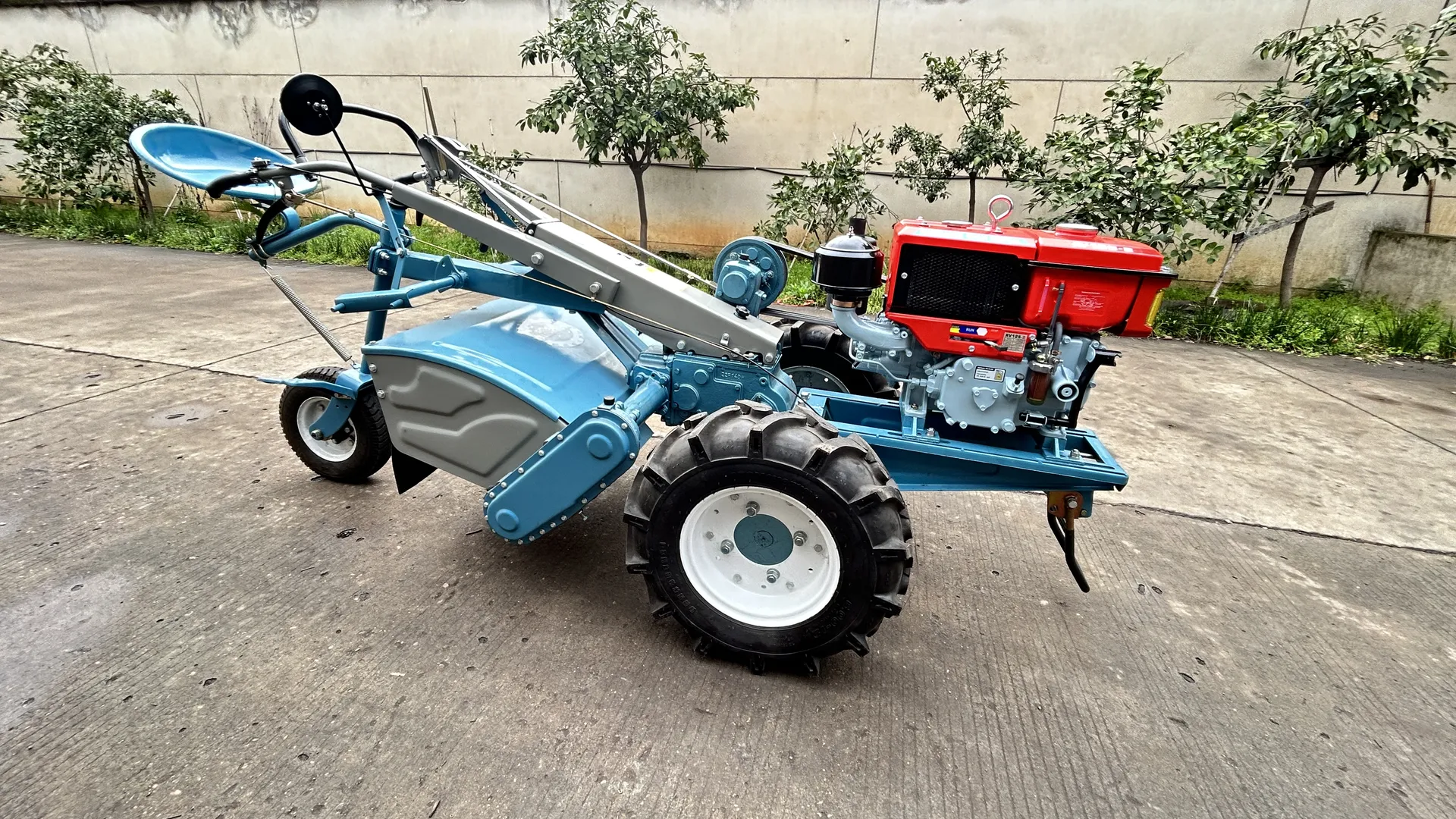
The engine end of a GN12 / Super 12: the framed diesel and the panel at its front are what the "water cooled" claim refers to. Whether that panel is a radiator core, a screen over a jacket, or an air intake is not something a photograph settles — it has to come off the specification.
The fields that make "water cooled" checkable
Eight questions turn the adjective into a specification. All are answerable without quoting a price, and each has a form of answer that does not count.
# | Ask for | A usable answer looks like | What does not count |
|---|---|---|---|
1 | Cooling architecture | "Open evaporative with a top tank" or "radiator, fan and pump with a thermostat" | "Water cooled" repeated back |
2 | Water or coolant capacity | A number in litres, for the system as supplied | "Standard" |
3 | Filler and level-check point | Where the cap is, and how the level is read | "Under the hood" |
4 | Radiator, fan, water pump, thermostat | Each part named as present or not fitted | A photograph |
5 | Cooling medium | Plain water, or a glycol mix at a stated ratio | "Any water" |
6 | Service points and intervals | What is checked daily, what is drained or flushed, how often | "Normal maintenance" |
7 | Ambient temperature behind the rating | The temperature band the power rating is declared at | A peak power figure with no conditions |
8 | Engine reference on the plate | The engine model and starting method, matching the plate on the machine | The chassis model alone |
Items 4 and 5 are the ones buyers skip, and the ones that cost money later. A machine with no radiator has no radiator to replace — but it has a daily water duty, and that duty lands on the operator, not on the importer. A machine with a radiator has a cap with a pressure rating, a belt that can glaze, and a coolant specification; the same distributor now has to stock or specify a coolant.
Item 8 is where the engine stops being an abstraction. The cooling system belongs to the engine actually fitted, not to the chassis model name, and small diesels in one power band are not interchangeable in their cooling arrangements. SUNTEC's GN12 documentation names two engine references for the 12.5 hp class — RV125-2 at 624 cc with hand starting, and RT125DI / RT125DIE at 666 cc with hand or electric starting — and which one is supplied is confirmed per quotation. That is why the plate matters: the same chassis can leave the factory with either, and the cooling answer has to follow the engine bolted to it.
What else belongs on a specification sheet, and which fields make a datasheet usable rather than decorative, is covered in the guide to what a power tiller datasheet should include.
The market you sell into decides which architecture hurts you
There is no universal winner, and a supplier who says otherwise is selling rather than specifying. What can be said is which conditions stress which system — and therefore which questions a distributor should put to a supplier for their own market.
Condition in your market | What it stresses | Question to put in writing |
|---|---|---|
Sustained heat, 40 °C and above in season | An open system loses water faster and has the atmospheric boiling point as its ceiling; a radiator system runs closer to its limit and depends on airflow | What ambient temperature is the rating declared at, and what derating applies above it? |
Dust, straw and chaff | Fins, screens and cores clog; airflow drops before anything else fails | What is cleaned daily, and how accessible is it without tools? |
Hard, silty or saline water | Scale and silt settle in a jacket, or block a core and wear a pump seal | What water quality is acceptable, and what does the flush interval become in that water? |
Frost in the off-season | Water left in an open system can freeze and split castings | Is there a drain point, and what does the handover instruction say about it? |
Intermittent use between jobs | Water evaporates, seals dry, belts take a set | What does the pre-season check consist of? |
Several operators per machine | The daily water duty is the first habit lost | Can the level check be done and taught in under a minute? |
Service far from the dealer | A radiator, cap, hose or pump is a part that has to be stocked; an open tank is not | Which cooling parts are consumables in your experience, and how are they supplied? |
Two rows deserve a note, because they are where a distributor's margin quietly disappears. Dust is the equal-opportunity problem: an open system's tank is less exposed to chaff, but a radiator's core is a filter nobody cleans until the machine overheats. Operator habit is the other: an open system's water level is a daily task, and a machine sold into a market with hired operators and no service culture will be run dry eventually. Neither point argues for one architecture — they argue for writing the answer into the handover.
Where the cooling question sits in the platform decision
Platform first, engine second, cooling third — in that order, because the platform decides what the engine has to carry and the engine decides how the heat leaves.
M80 (light chassis) | GN12 / Super 12 (heavy chassis) | |
|---|---|---|
Overall size | 2050 × 710 × 1235 mm | 2950 × 980 × 1240 mm |
Weight without engine | 179 kg | 470 kg |
Engine | 7–10 hp, confirmed per quotation | 12.5 hp class, confirmed per quotation |
Gears | 6 forward / 2 reverse | 6 forward / 2 reverse |
Gearbox | Aluminium | Cast iron |
Tilling width | 480 mm standard, 600 mm optional | 480 or 600 mm as published; the spec sheet the distributor receives records the 600 mm build |
Implements | Rotary tiller, single-furrow plough, small trailer | Rotary tiller, double-furrow plough, anti-skid wheels, small trailer |
Cooling | Set by the engine fitted; confirm with the quotation | Documented as a horizontal single-cylinder water-cooled four-stroke diesel |
The GN12 / Super 12 is the platform whose documentation names the cooling type directly — a horizontal single-cylinder water-cooled four-stroke diesel, 12.5 hp maximum output in the published reference. On the GN12 walking tractor that is the documented configuration, not an option to be discovered. The M80 power tiller is a different case: a 7–10 hp chassis whose engine is a separately confirmed supply item, so the cooling arrangement follows the engine finally specified. A buyer should not carry an assumption from one platform to the other, and this article deliberately does not.
The weight column is also why a quotation can surprise people. Both figures are without engine, and an engine adds mass plus the cooling system it brings. A container plan built on a bare-chassis figure, with engines arriving as a separate line, has to be built on the combination — worth raising at quotation stage rather than at the dock.

Chassis without engines, waiting for engine fitment. The cooling system arrives with the engine, not with the frame — which is why the engine reference belongs in the order, not in the assumption.
Each platform's detail is set out separately: the GN12 configuration guide covers the heavy chassis, the M80 configuration guide the light one.
What to put in writing before the order
Everything above collapses into one message. Write it in this order and send it as a single document, not across three emails.
- Platform and build. Model, and the tilling width if a tiller-side part is involved.
- Engine reference and starting method, as marked on the plate and as you intend to order it.
- Cooling architecture, named in the supplier's own words.
- System capacity and the level-check point.
- Parts present — radiator, fan, water pump, thermostat, each stated as present or not fitted.
- Cooling medium and the water-quality limit.
- The ambient temperature the rating assumes.
- The daily and seasonal service actions, in the words that will appear in the handover instruction.
Two rules make the list work. Ask for what can be checked against the machine — a number, a named part, a marked plate — rather than a confirmation of the adjective. And keep the commercial line separate: price, order quantity and delivery are quoted against the configuration you have just defined, and mixing the two in one paragraph is how a technical answer turns into a sales reply.
The power tiller RFQ builder follows this order, if a template is easier than a blank page.
What to check when the machine arrives
The point of the eight questions is that they can be verified on arrival, before the machine goes into a field. Work in one order: check it cold, run it up to working temperature, then re-check it warm.
- Read the plate first. Engine model and starting method as marked, against what the order says. If the cooling answer was given for a different engine reference, it is the wrong answer.
- Find the filler and read the level with the engine cold — the cap on a radiator system, the tank on an open one. The two-wheel-tractor maintenance manual published by CIMMYT and ILRI sets out the routine for checking and topping up coolant as a before-start task, and flags a mistake that recurs in the field: keep the fuel cap and the water cap identified, so fuel does not go into the radiator and water does not go into the tank.
- Inspect the surfaces that particular architecture actually has. On an open evaporative system, look into the filler neck and the tank for silt, scale and chaff, and clear the strainer or screen if one is fitted; on a radiator system, check that the core and the fan guard are clear, with no packing material left behind and nothing that will hold chaff.
- Check hoses and clamps by hand. Firm — not hard, cracked or swollen — and no weeping at the joints.
- Use a checklist, not memory. A preventive-maintenance checklist of the kind used for farm machinery — the Utah State University Extension preventive maintenance checklist is one published example — treats radiator level, coolant condition and a cooling-system pressure test as standard items, which is a reasonable model for an arrival inspection.
Then run it up to working temperature with the drive disengaged, let it settle back to idle, and check again. If the machine carries a coolant temperature gauge, record the reading cold and the reading at working temperature — a gauge that never moves, or climbs slowly under load, is a fault worth reporting on its own. Most open evaporative systems have no gauge at all, and there the first week's top-up volume is the only water-level signal the machine gives you: record how much water or coolant is added each day. A top-up rate is the cheapest early warning a distributor will get, and it is only useful if the first week is documented.
Before any of the checks that involve a hot or pressurised system, one safety rule: shut the engine down and let it cool before opening a cap or a hose, with the drive disengaged. Extension guidance summarising agricultural safety and machinery requirements is consistent that power is shut off before work on a machine; a cooling system opened hot will scald.
Reading the specification that came with the machine, field by field, is its own skill — the guide to reading power tiller specifications takes that apart.
FAQ
Does water cooled mean the engine has a radiator? No, and this is the most common misunderstanding in the category. Small single-cylinder diesels are also water cooled by evaporation from an open tank or hopper, with no radiator, no pump and no thermostat at all. Both are legitimately water cooled; only one has a radiator. Ask which, and ask for the capacity.
Is a water-cooled walking tractor better than an air-cooled one? Not in general. A water-cooled engine holds a more stable temperature under sustained load; an air-cooled engine removes the water duty entirely, which matters where operators are casual about daily checks. What decides it is the working pattern, the ambient heat, the dust and the water available — not the cooling type on its own.
How much water does an open system use in a day? It depends on load, ambient temperature and tank size, so treat any single figure with suspicion. The reference description of open hopper cooling puts a working day at several bucketfuls on the small engines it documents. The practical answer is to have the operator measure it in the first week and record it — that number, not a catalogue claim, tells you whether the tank suits your market.
What if the listing only says "water cooled" and the supplier will not go further? Then you have a supplier who cannot answer a technical question, and that is information too. Ask for the engine reference and a photograph of the plate, and for a parameter table that includes cooling. If the answer is still the adjective, the cooling system is unconfirmed — write it into the order as an open item rather than assuming the more familiar architecture.
What to do next
The job is short: fix the platform, fix the engine reference, then make the supplier name the cooling system and its service duties in writing. Eight lines — architecture, capacity, filler and level check, parts present, medium, ambient rating, service actions, engine plate — turn an adjective on a listing into something you can inspect when the machine lands.
Bring those lines to our team with your market and working pattern and the configuration can be answered against them. If the platform choice is still open, start from the configuration guides rather than from a model number; if a cooling part has already failed, the cooling-system parts and support route is the one written for that.